Oct 13, 2026Buying Guides
How to Choose a Metal Band Saw Machine
Choose a metal band saw by workpiece material, shape, size, production volume and cutting process. Use LIANJI model examples to prepare a useful inquiry.
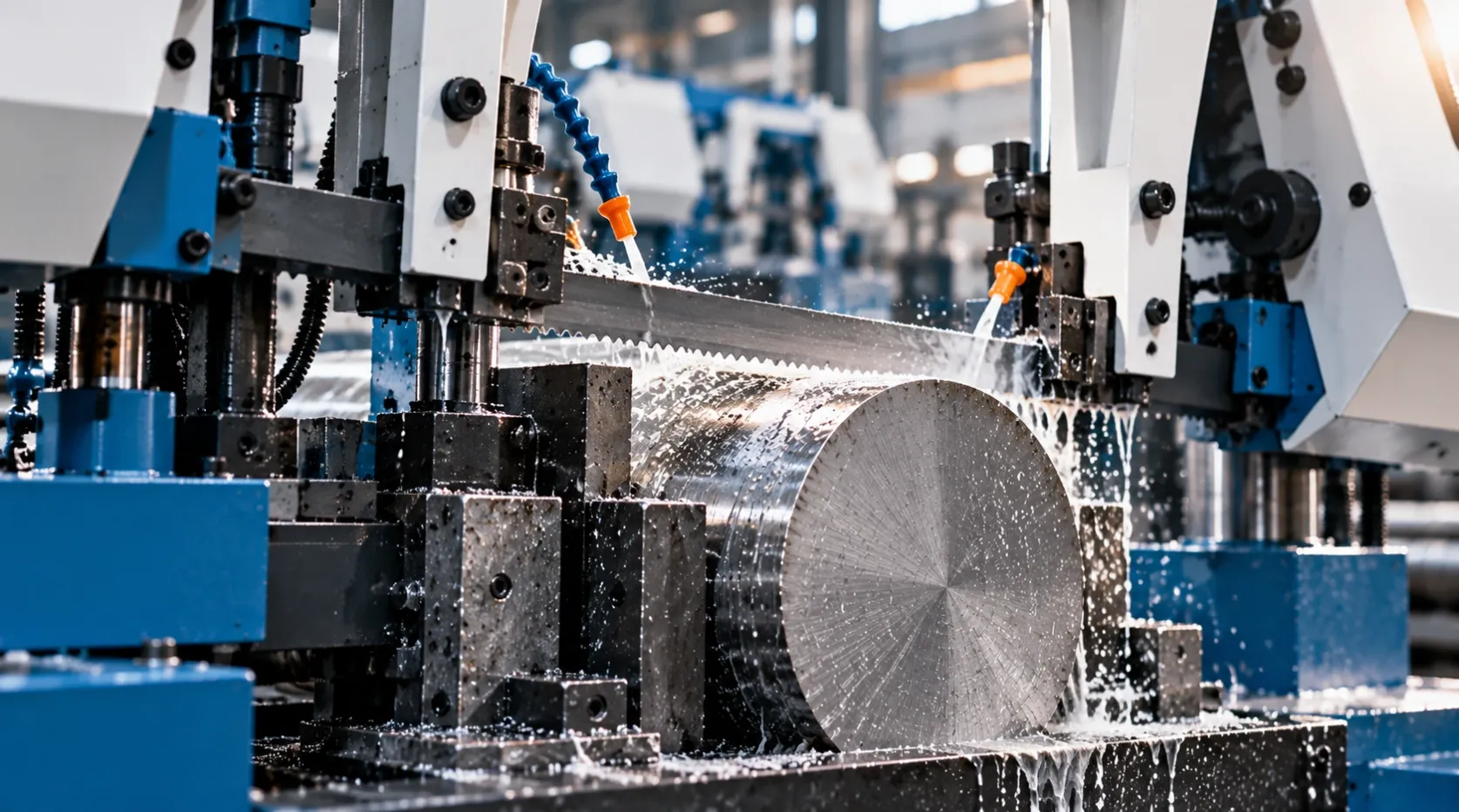
The right metal band saw starts with the workpiece and the daily cutting job. Record the material grade, cross-section, normal and maximum dimensions, number of cuts, required cut length and whether you need straight or angled cuts. These details tell you more about the required machine than a single headline capacity figure. This guide helps you narrow the machine type before comparing quotations.
Define the material and cross-section
Tell the supplier what you actually cut: for example, carbon steel solid bar, stainless steel tube, structural profile or a mixed bundle. A 280 mm solid bar and a 280 mm outside-diameter thin-wall tube can fit the same nominal opening but place different demands on blade pitch, chip removal, clamping and feed. Include material grade and hardness when available, especially for difficult alloys.
Record both your most common size and the largest size you expect. If most jobs are 150–200 mm round bar and a 300 mm bar comes through only occasionally, a supplier needs to know both. The answer may affect machine capacity, blade size and the economics of the purchase. Do not select solely from the rare maximum without discussing how the machine will handle everyday work.
Shape matters as well as diameter. A machine's round, square and rectangular capacities are often different. If you process a bundle, ask for the bundle clamping range rather than assuming that the single-piece capacity also applies to a stack of parts. For angled work, request the actual capacity at each required angle; a 90-degree figure cannot establish miter capability.
Match the machine layout to the cutting task
For cutting bars, pipes and profiles to length, a horizontal band saw is usually the starting point. The workpiece is held while the saw head moves through the material. A vertical band saw is generally considered when the operation needs contour cutting or the workpiece must be guided through the blade. Confirm the machine's actual configuration with the supplier rather than assuming every band saw can perform both tasks.
LIANJI's horizontal range includes smaller double-column machines, larger standard machines, gantry machines and a high-speed intelligent series. The catalog lists the GB4028A at up to Ø280 mm for round material, the GB4243A at up to Ø430 mm, and the gantry GB4270A at up to Ø700 mm. These are model-specific maximum round capacities, not promises that every material and shape can be cut at the same output rate. The catalog also gives minimum workpiece sizes and separate square capacities; check the full model sheet against your job.
For example, a buyer considering the GB4028A should note that its listed square range reaches 380 mm wide by 280 mm high, while the listed round maximum is Ø280 mm. Comparing the two figures without naming the workpiece shape would be misleading. A service center handling much larger stock may need a gantry configuration, but it should confirm handling, available floor space and the complete cutting range as well as the maximum diameter.
Estimate how often the cut repeats
The next question is what the operator must do for each cut. Occasional, varied jobs may favor a simpler process with more operator involvement. Repeated lengths across a shift make automatic feeding and cycle repetition more valuable. The machine label alone is not enough: ask which steps the particular configuration automates, including feeding, positioning, clamping, cutting and return.
LIANJI's catalog describes PLC touchscreen operation, manual/automatic mode switching and hydraulic feeding with grating-scale positioning on the GB4028A/GZK4233A group. The GZK4243A/GZK4253A group also lists PLC control and hydraulic feeding. These documented features are useful for repeated work, but the catalog does not give a universal positioning tolerance or cuts-per-hour figure. Request a demonstration or a representative cutting test if repeatability or throughput will determine the purchase.
Some product families address different work patterns. The GZK4243A catalog provides a separate square bundle-cutting range of 230–400 mm width by 70–180 mm height. That does not mean every stock shape can be bundled safely; provide the individual piece geometry and bundle arrangement for review. LIANJI's KSZ high-speed series targets more demanding production cutting, but its quoted fast-cut example is tied to a specific test and should not be generalized to all materials.
Prepare a useful inquiry
You can obtain a better recommendation by sending one short cutting brief instead of asking for a price on a model number alone:
- Material grade and approximate hardness, if known.
- Solid bar, tube, pipe, profile or bundle; include a sketch or photo for unusual shapes.
- Typical and maximum dimensions, plus tube wall thickness where relevant.
- Desired cut length, daily or monthly cut count, and whether lengths vary.
- Required straight or miter cuts, and any documented dimensional tolerance.
- Current blade or machine information, available power supply and destination country.
If you have a difficult workpiece, ask the supplier to show the material grade, dimensions, blade specification, band speed, cutting time and cut result in a test. A video without these conditions cannot tell you whether its result will transfer to your shop.
Start with the application, narrow the layout and capacity, then compare the actual model specifications. For a deeper quotation review, read our guide to comparing metal band saw specifications; for repetitive production, read our manual-versus-automatic guide. Explore LIANJI's Band Saw Machines range or send the cutting brief to the sales team for a model and blade recommendation.