Product Knowledge
Band Saw Blade Backing Steel: Why Blades Crack Before the Teeth Wear Out
Why do band saw blades crack before the teeth wear out? Learn how backing steel fatigues and what to check at the back edge, tooth gullet, or weld.
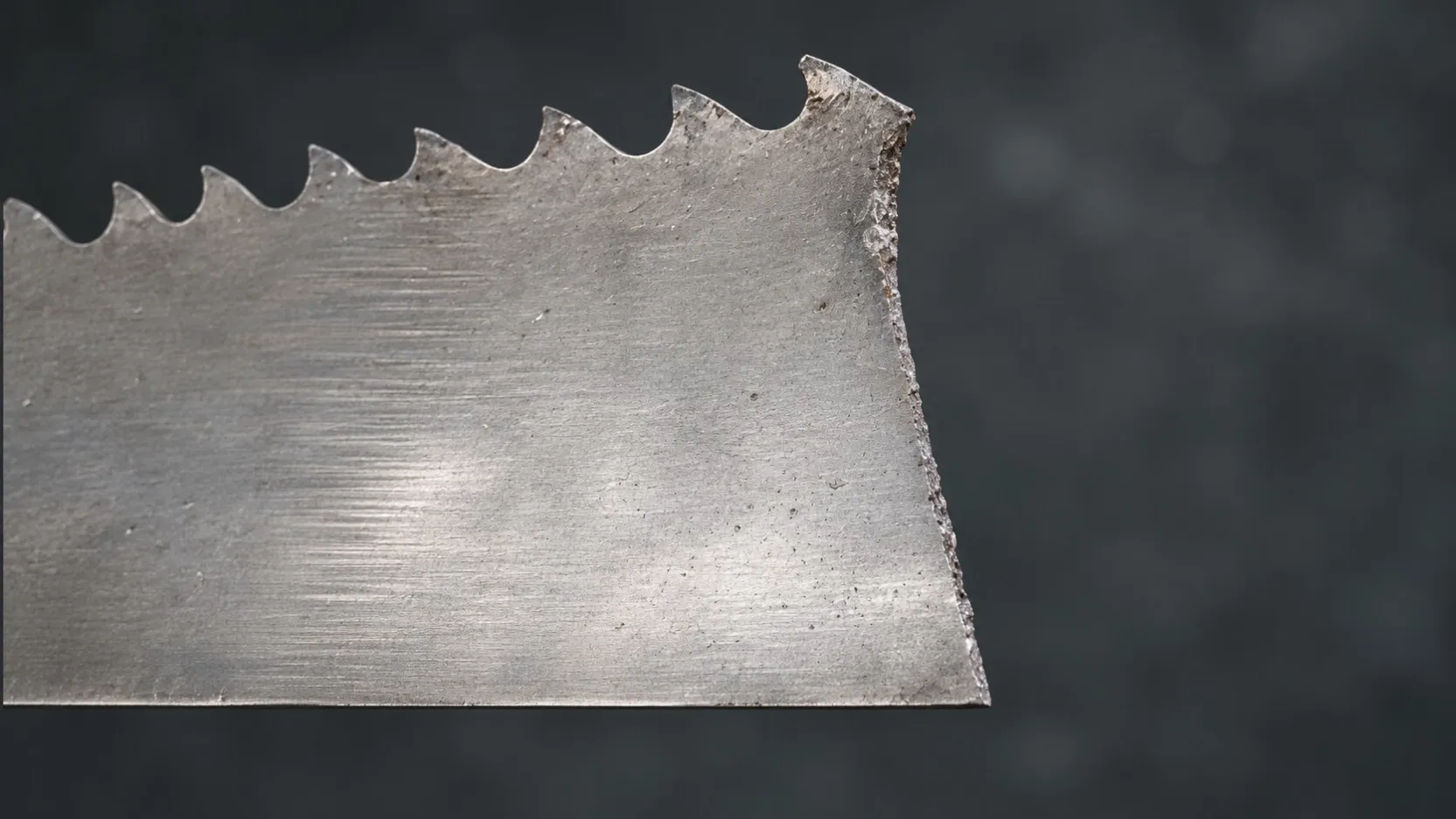
If your band saw blade cracks while the teeth are still sharp, start by checking where the crack began: at the back edge, in a tooth gullet, or near the butt weld. Repeated bending around the saw wheels can contribute to fatigue. Blade tracking, guide contact, tension, and blade thickness can also affect when a blade fails. The crack location helps you decide what to check first.
For metal cutting shops, the distinction matters. A blade removed because the teeth are dull has reached a different limit from one that breaks while the cutting edge is still usable. If the blade body is failing first, switching to a harder tooth grade may leave the underlying problem unresolved.
Why Does Band Saw Blade Backing Steel Fatigue?
A band saw blade bends around each wheel and straightens as it leaves. Every section of the blade repeats this cycle whenever the saw runs, including when the blade is out of the cut. Fatigue resistance is the ability to withstand those repeated loads without cracking prematurely. A small crack can develop and grow over many cycles, so the final break can appear sudden.
Blade thickness and wheel diameter affect how much the blade bends. On the same wheel, a thicker blade experiences greater bending strain at its surface. With the same blade thickness, a smaller wheel increases that strain. When ordering a replacement, confirm the length, width, and thickness specified for your machine. A loop can fit around the wheels and still be the wrong thickness for the saw.
Cracks can begin at points where stress concentrates, such as a nick on the back edge or a sharp mark in a tooth gullet. Where the crack begins is often more useful for troubleshooting than the fact that the blade broke.
Where Did the Blade Crack? Start Here
Use the table to narrow down what to inspect. A mark or break location is a clue; it does not establish the cause on its own.
What you see | What to check first |
Back edge crack with a polished strip or scoring nearby | Inspect the back guides and blade tracking. Look for signs that the blade has been rubbing a wheel flange or another surface it should clear. |
Crack starting in a tooth gullet | Look for similar cracks in adjacent gullets. Review chip packing, feed, and whether the tooth pitch suits the workpiece section. |
Break at or near the butt weld | Keep the failed blade and photograph both sides of the joint. Tell your supplier if other blades from the same batch broke in the same location. |
Rounded teeth, longer cut times, and no visible body crack | Investigate tooth wear first. Review cutting speed, feed, and coolant conditions before drawing conclusions about the backing steel. |
When cutting tubing or profiles, use LianJi’s Band Saw Blade TPI Chart for Metal Bars and Tubes to review tooth engagement. If several blades crack in the same location on one machine, compare that saw’s guide condition, tracking, and tension with the machine manufacturer’s specifications before changing blade grades.
What Does Spring Steel Backing Do in a LianJi Bimetal Blade?
LianJi bimetal band saw blades combine a high-speed steel cutting edge with a spring steel backing. The teeth cut the metal. The backing supports the cutting edge, carries blade tension, and flexes as the blade passes around the wheels. For a closer look at how the two materials work together, see our guide to bimetal band saw blade construction.
When comparing finished blades, look beyond tooth hardness. Backing material and heat treatment, edge condition, and the quality of the loop weld are all relevant. The butt weld joins the two ends of the blade into a loop. It is separate from the bond between the high-speed steel edge and the backing.
How Can Buyers Compare Blade Life in Production?
Start by recording why each blade was removed. Two blades may produce the same number of acceptable cuts, but one may be retired because its teeth are dull while the other cracks with a usable cutting edge. Those outcomes call for different follow-up.
- Compare blades on the same saw with comparable workpieces. Match blade dimensions, tooth pitch, and tooth grade where possible. Record any differences in the blades or the machine settings.
- Track running hours as well as acceptable cuts. The number of cuts tells you what the blade produced. Running hours help put repeated bending in context, especially when the saw spends different amounts of time running out of the cut.
- Record the reason for removal and photograph any break. If a pattern repeats, note whether it follows one saw, one workload, or one blade batch. That gives your maintenance team and supplier a clearer place to start.
A production trial compares finished blades under your operating conditions. If the blades differ in thickness, tooth geometry, or weld quality, the trial can help you choose the better blade for the job, but it cannot isolate the effect of the backing steel.
Send LianJi a Photo of Your Blade Break. Start with a close-up of the break, your saw model, and your blade dimensions (length × width × thickness). If you know the workpiece material or how long the blade ran before breaking, include that too. These details help us suggest what to check first and whether a different blade specification is worth testing.