Product Knowledge
Bimetal Band Saw Blade Construction: Why HSS Teeth and Spring Steel Backing Matter
Learn why bimetal band saw blades combine HSS teeth with spring steel backing, how each material works, and what LianJi needs to recommend a blade for your application.
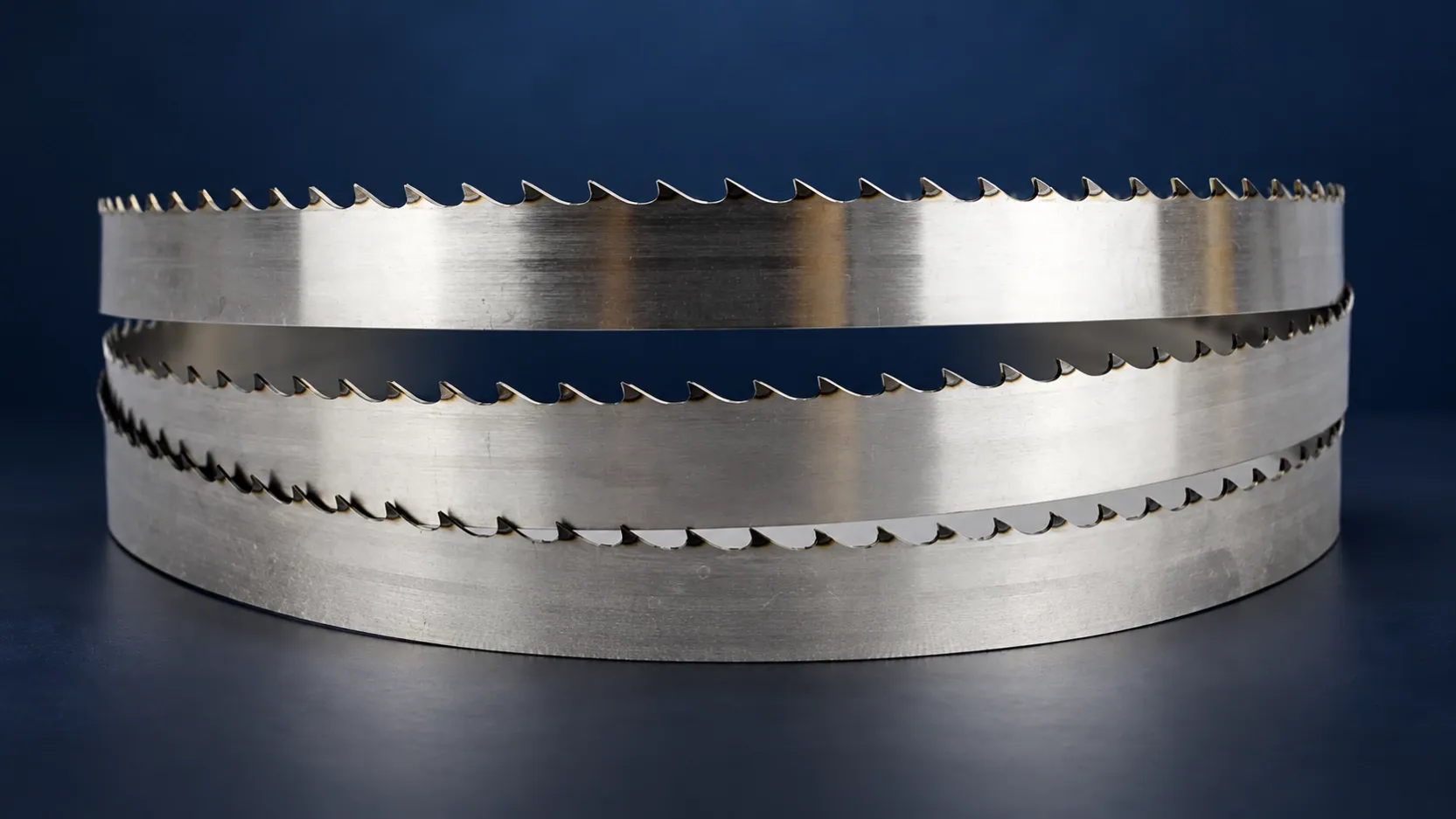
When buying a bimetal band saw blade, many buyers first look at the tooth material, such as M42 or M51. However, reliable cutting also depends on the backing steel, tooth geometry, and how well the blade matches the machine and workpiece.
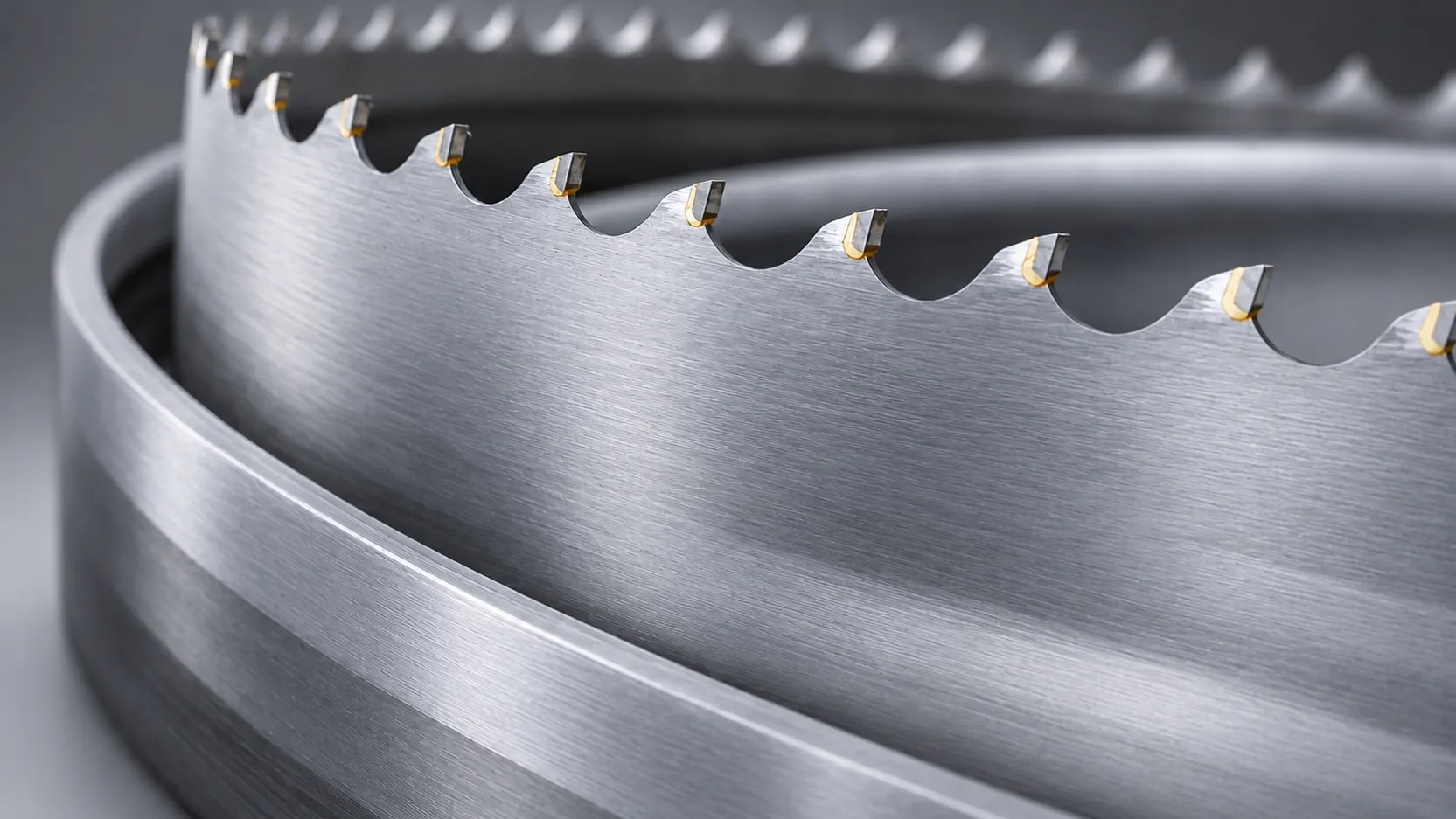
Bimetal band saw blade construction combines a high-speed steel cutting edge with fatigue-resistant steel backing to meet two different demands: cutting metal and surviving repeated bending. The teeth remove material, while the backing supports them as the blade travels around the saw wheels.
At LianJi, our product range includes both metal sawing machines and band saw blades. When discussing blade selection, we consider the complete cutting task: the material, the machine, and the problem the buyer wants to solve.
What Is a Bimetal Band Saw Blade?
A bimetal band saw blade combines two steels with different functions. Its cutting edge uses high-speed steel, commonly abbreviated as HSS. Its body uses a backing steel selected for strength, flexibility, and resistance to fatigue.
The backing is often described as alloy spring steel, although the exact material and treatment vary between products.
Component | Main responsibility |
|---|---|
HSS cutting edge | Forms the teeth and resists cutting wear |
Spring steel backing | Supports the teeth and withstands repeated bending |
This construction allows each material to perform a role suited to its properties. Understanding both parts gives buyers a better basis for comparison than looking at the tooth material alone.
Why Use High-Speed Steel for the Teeth?
The teeth contact the workpiece directly. As they form chips, they experience friction, heat, and cutting loads. The cutting edge therefore needs wear resistance and the ability to retain sufficient hardness at cutting temperatures.
High-speed steel provides properties suited to these demands. M42 is one established HSS grade used in bimetal band saw blades.
However, a tooth material designation does not describe the entire cutting solution.
Solid steel bars and thin-wall tubes create different cutting conditions. Even when their material grades are identical, they may require different tooth pitches and geometries.
Tooth material, tooth design, and pitch should be selected together. Upgrading the HSS grade alone may not solve tooth stripping caused by loose workpieces or unsuitable tooth spacing.
Why Use Spring Steel for the Backing?
During operation, the blade repeatedly bends around the saw wheels and straightens as it passes through the cutting area. Its backing must withstand this cycle while carrying tension and supporting the cutting edge.
This requires a balance of strength, toughness, and fatigue resistance.
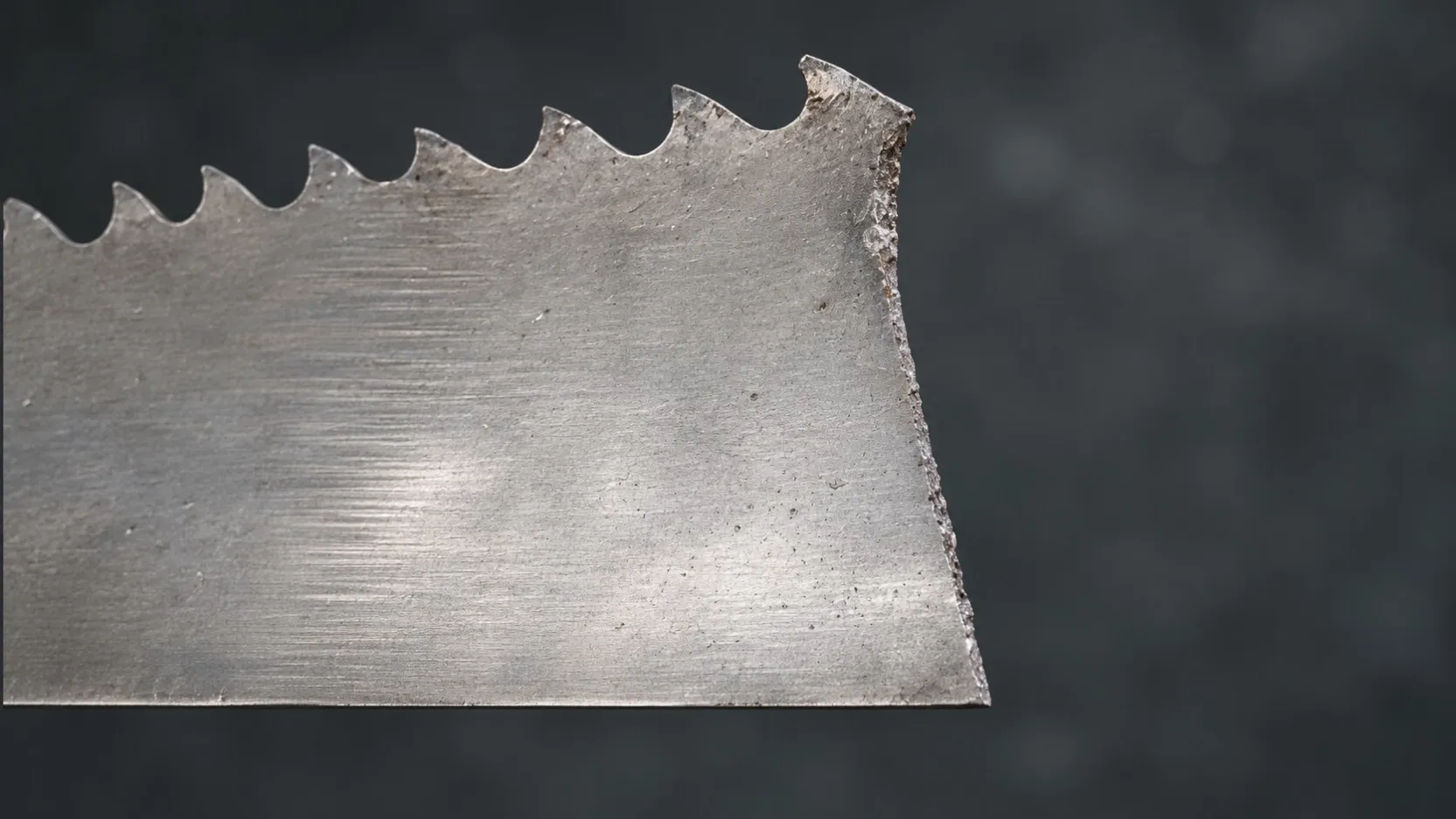
If cracks develop in the backing, the blade may become unusable even when its teeth still have cutting life remaining. However, early breakage does not automatically indicate poor backing material.
Incorrect tension, worn guides, and wheel alignment problems can also increase stress on the blade.
When contacting LianJi about blade breakage, include the fracture location, clear photographs, and details of the operating conditions. These provide a more useful starting point than the blade grade alone.
Why Can Two M42 Blades Perform Differently?
The M42 designation identifies the HSS tooth material. It does not define every aspect of the finished blade.
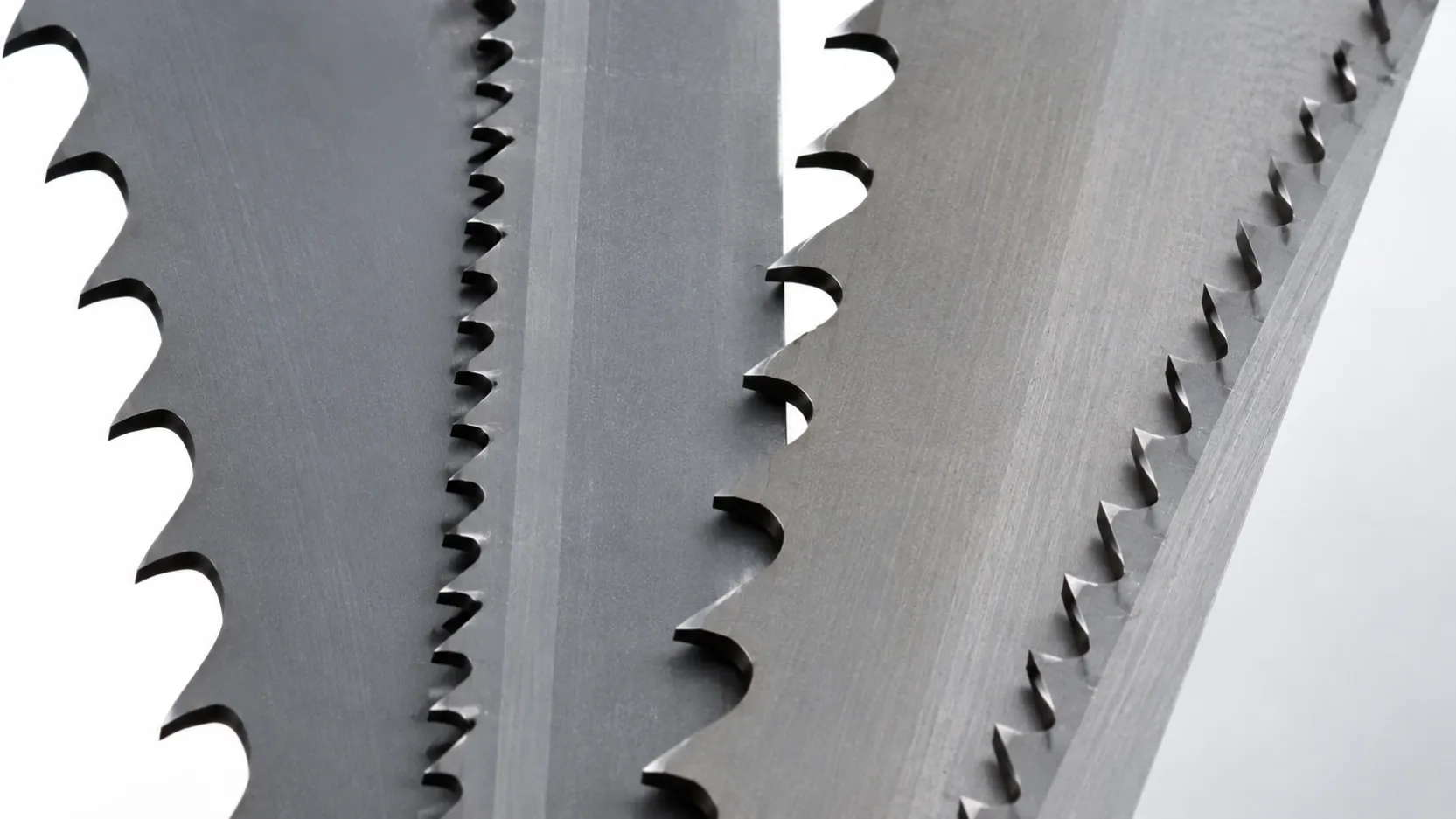
Two blades with the same dimensions and tooth material can differ in backing properties, tooth geometry, manufacturing consistency, and suitability for the application.
Before comparing products, check the following:
- Backing material: Is it suitable for the machine and operating conditions?
- Tooth geometry and pitch: Do they match the workpiece section and cutting arrangement?
- Manufacturing consistency: Are the teeth, tooth set, and weld condition consistent?
- Operating conditions: Are speed, feed, coolant, and clamping appropriate?
For tooth-pitch selection, our Band Saw Blade TPI Chart for Metal Bars and Tubes provides a starting point.
Compare Results Under the Same Cutting Conditions
Statements such as “one blade lasts a week” are difficult to evaluate without knowing the workload.
A workshop cutting intermittently and a production line operating continuously may report the same blade life in days while completing very different numbers of cuts.
When evaluating a LianJi blade or another supplier’s recommendation, keep the trial conditions as consistent as possible. Record the material, workpiece dimensions, machine, cutting settings, acceptable cuts, and reason for blade replacement.
Cost per acceptable cut is more useful than blade price alone. It connects purchase cost with the output your workshop actually receives.
What Information Does LianJi Need for Blade Selection?
Start with the machine requirements, then match the blade to the workpiece and production goal.
If your current blade cuts crooked, loses teeth, or breaks prematurely, describe that problem before requesting a higher-grade replacement. Checking the existing setup may help prevent the same failure from recurring.
For selection assistance from LianJi, send:
- Your saw model and blade dimensions.
- Workpiece grade, hardness, and cross-section.
- Whether you cut individual pieces or bundles.
- Current tooth pitch and the main cutting problem.
If the full specification is unavailable, send photographs of the machine nameplate, existing blade markings, and workpiece.
Understanding HSS teeth and spring steel backing is the starting point. Matching their combined performance to your machine and cutting task is what makes blade selection useful in daily production.