Product Knowledge
Band Saw Blade Tooth Hardness and Wear Resistance: Do Harder Teeth Last Longer?
Learn how tooth hardness, wear resistance, and toughness affect band saw blade performance, and how to compare blades in a cutting trial.
A higher tooth hardness rating does not guarantee a longer blade life. Hardness tells you how the tooth material resists indentation under test conditions. A cutting trial tells you how the blade performs on your machine and workpiece.
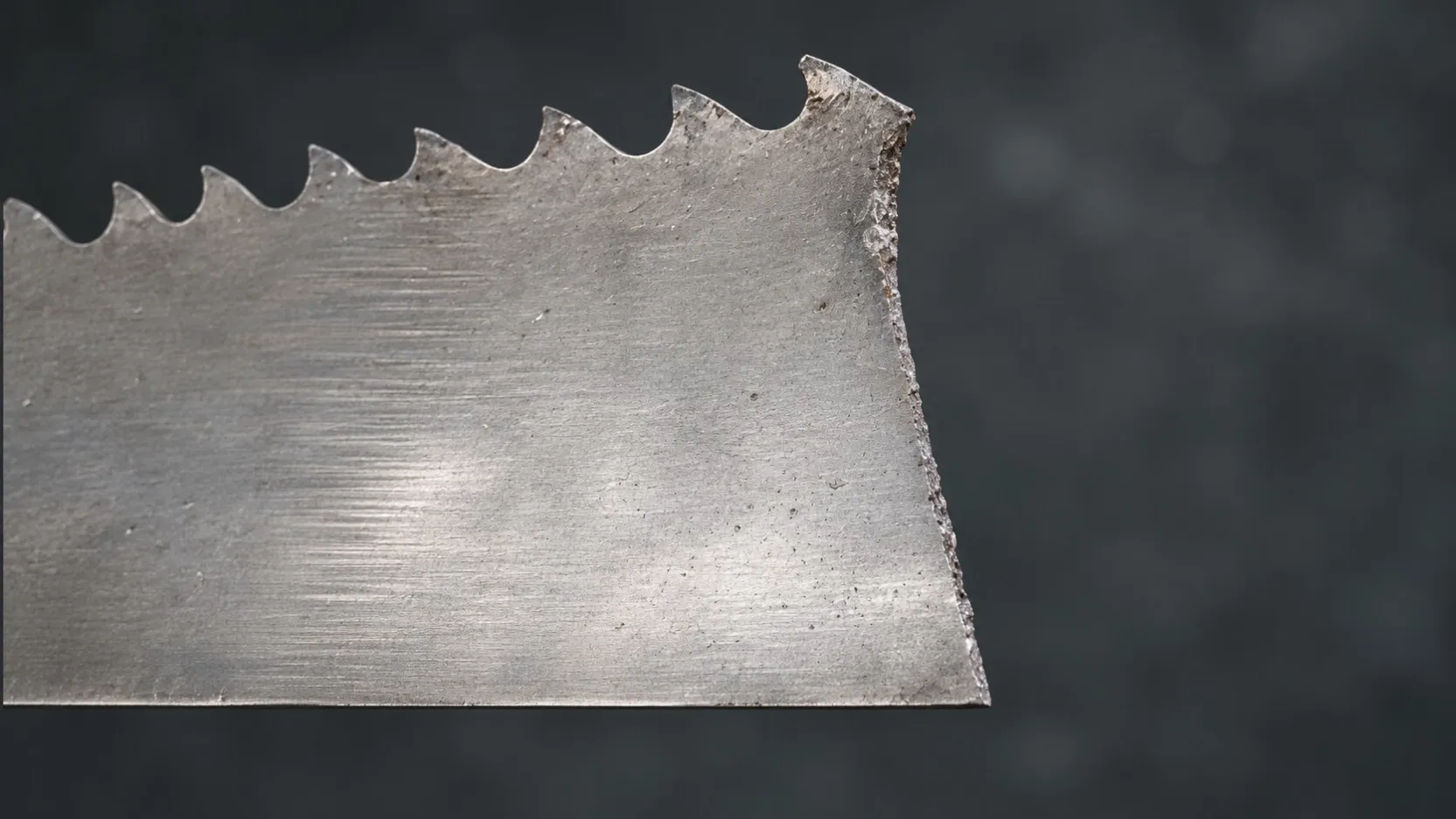
If the teeth gradually wear down and each cut takes longer, a more wear-resistant blade may be worth testing. If several teeth chip in the first few cuts on thin-wall tubing, start by checking tooth pitch, clamping, and feed at entry. Knowing how the blade fails helps you decide what to check before changing grades.
What Is the Difference Between Hardness, Wear Resistance, and Toughness?
Property | What it means for metal cutting |
Tooth hardness | Resistance to local indentation under specified test conditions. It describes a property of the tooth material. |
Hot hardness | The ability to retain hardness at elevated temperatures. A room-temperature reading does not establish how much hardness the material retains as it heats up. |
Wear resistance | The ability of the cutting edge to resist material loss during use. It matters when gradual wear limits blade life. |
Toughness | The ability to absorb energy before fracturing. It matters when the cutting edge is exposed to repeated or sudden loads. |
Two blades with similar room-temperature tooth hardness can perform differently. Tooth geometry, workpiece condition, cutting speed, feed, and coolant all affect how the edge behaves in the cut.
What Does Tooth Hardness Tell You About a LianJi Bimetal Blade?
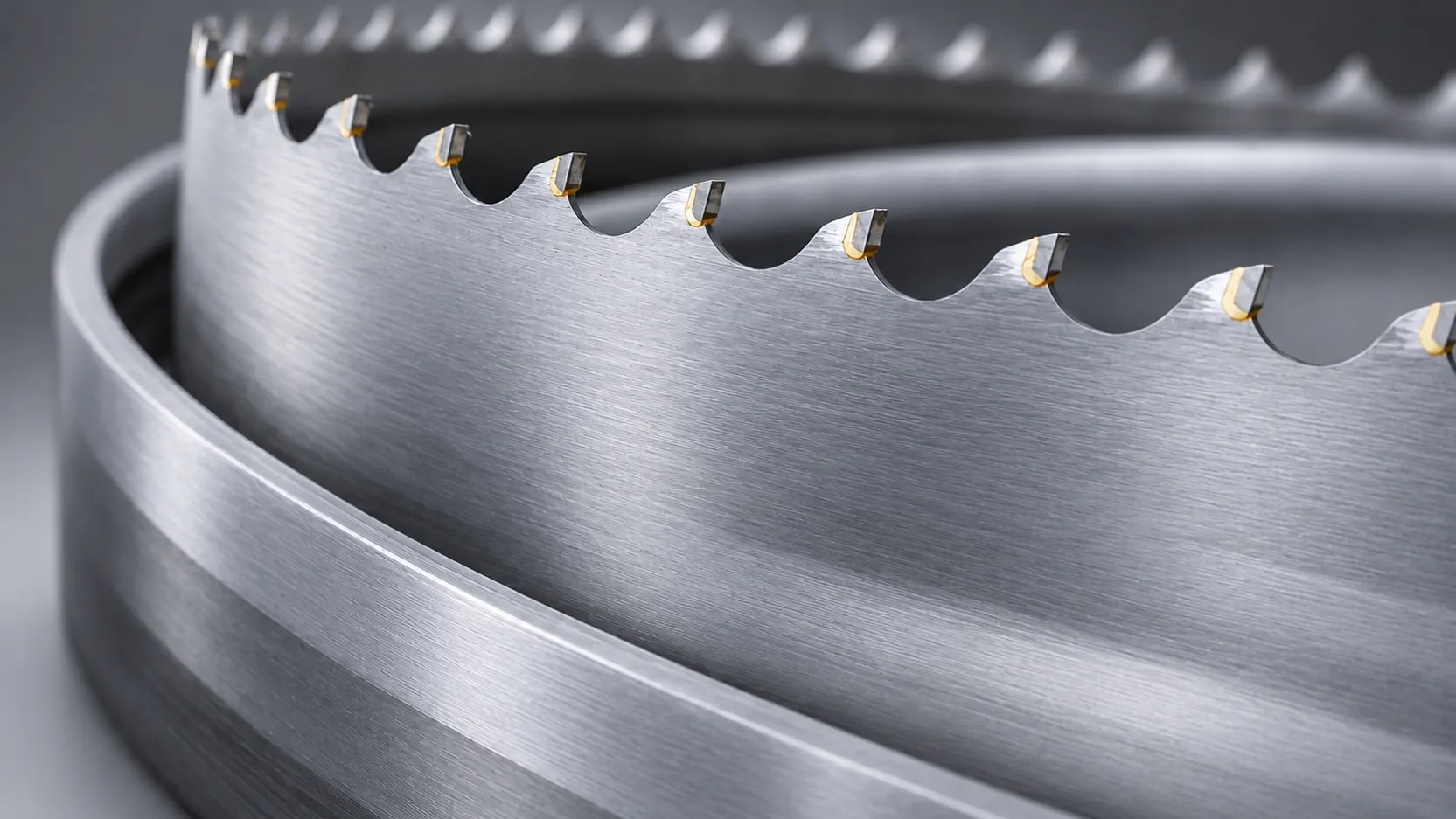
A LianJi bimetal band saw blade combines a high-speed steel cutting edge with a spring steel backing. The teeth cut the metal. The backing supports the cutting edge and flexes repeatedly as the blade runs around the saw wheels.
Tooth hardness describes one part of that design. When comparing finished blades, also consider the tooth profile, tooth set, backing flexibility, and the condition of the butt weld on welded loops. These are separate aspects of blade quality. Read more about how the two materials work together in our guide to bimetal band saw blade construction.
If hardness is part of your purchasing specification, confirm the test method, original scale, and measurement location. Rockwell C (HRC), Rockwell A (HRA), and Vickers (HV) use different methods or test conditions, so their numbers cannot be compared directly. If a value has been converted, ask for the original reading and the basis for the conversion.
How Does LianJi Match the Blade to the Job?
LianJi starts with the workpiece material and condition, cross-section, and expected cutting volume, then checks which blade sizes and tooth pitches suit the machine and application.
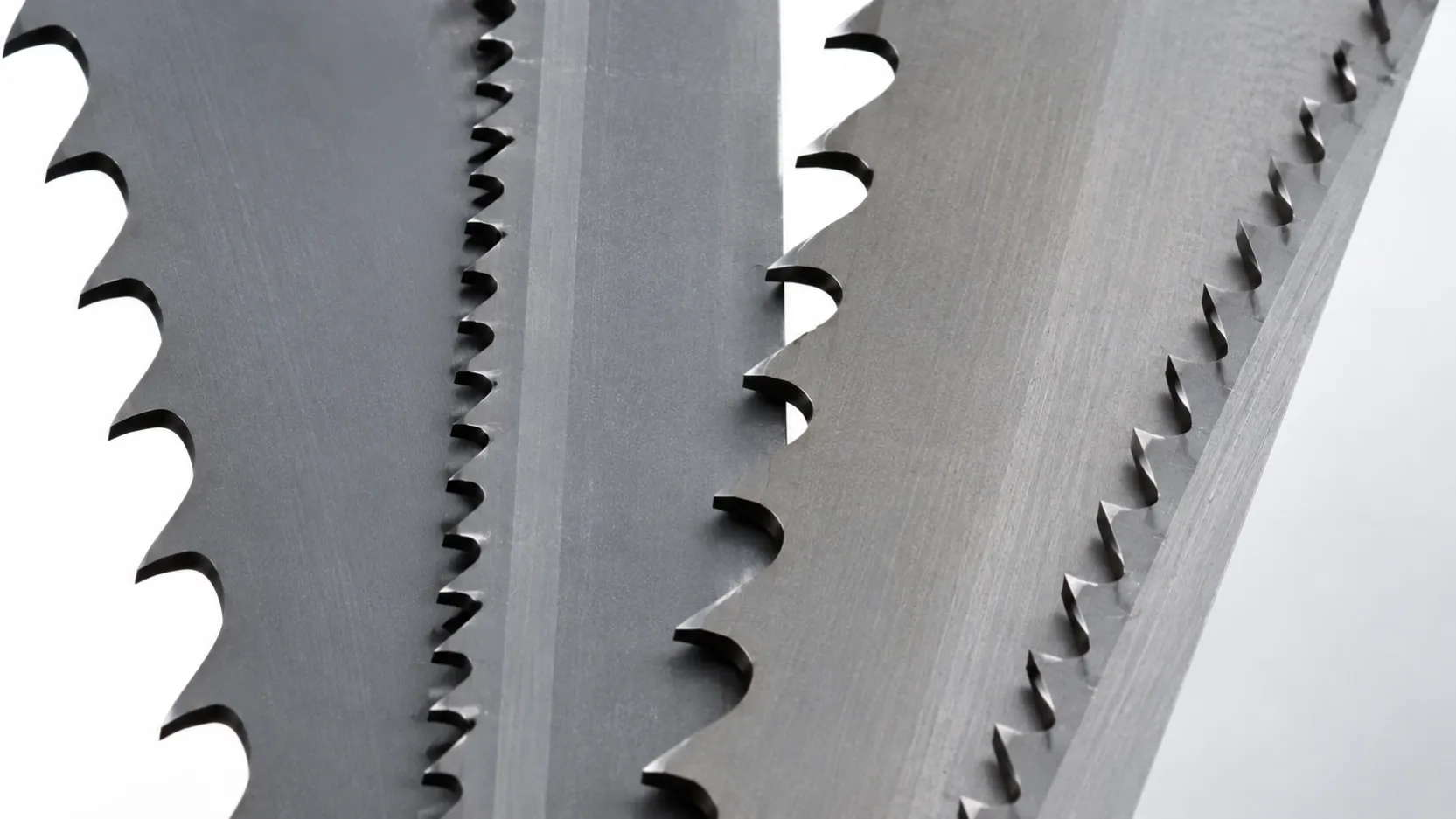
For example, a 50 mm solid bar and a 50 mm outside-diameter tube with a 2 mm wall have the same outside dimension. But the number of teeth engaged changes differently as the blade moves through each section. A pitch that works well on the solid bar may be unsuitable for the tube. If a new blade chips early on the tube, review pitch and clamping before selecting a different tooth material. Our Band Saw Blade TPI Chart for Metal Bars and Tubes is a useful starting point.
If the setup suits the job and gradual tooth wear remains the main reason for blade changes, compare the options relevant to your application: M42 vs M51, M51 vs M51+, or M71 PM HSS vs Carbide.
How Do You Verify Blade Life in a Cutting Trial?
Run both blades on the same machine with comparable workpieces. Set the same cut acceptance criteria and agree in advance on when to replace each blade. Follow the appropriate break-in and cutting recommendations for each option, and record any differences in settings. Repeat the trial if the result will guide a production purchase.
Track acceptable cuts per blade, time per cut, and the reason for blade replacement. To compare blade cost alone, divide the price of each blade by the number of acceptable cuts it produces. Consider changeover time and rejected parts separately. If the blades also differ in tooth geometry or pitch, use the result to choose the better blade for the job; the trial cannot isolate the effect of tooth hardness.
Ask LianJi for a Blade Recommendation. Send us your material grade, workpiece dimensions, and main cutting problem. For tubing, include the outside diameter and wall thickness. Your current blade size, TPI, or a close-up photo of the teeth can also help us recommend what to check first or which blade to trial.