M71 PM HSS vs Carbide Band Saw Blades: Which Is Better?
Compare M71 powder metallurgy HSS and carbide band saw blades in hardness, toughness, cutting performance, cost, and applications.
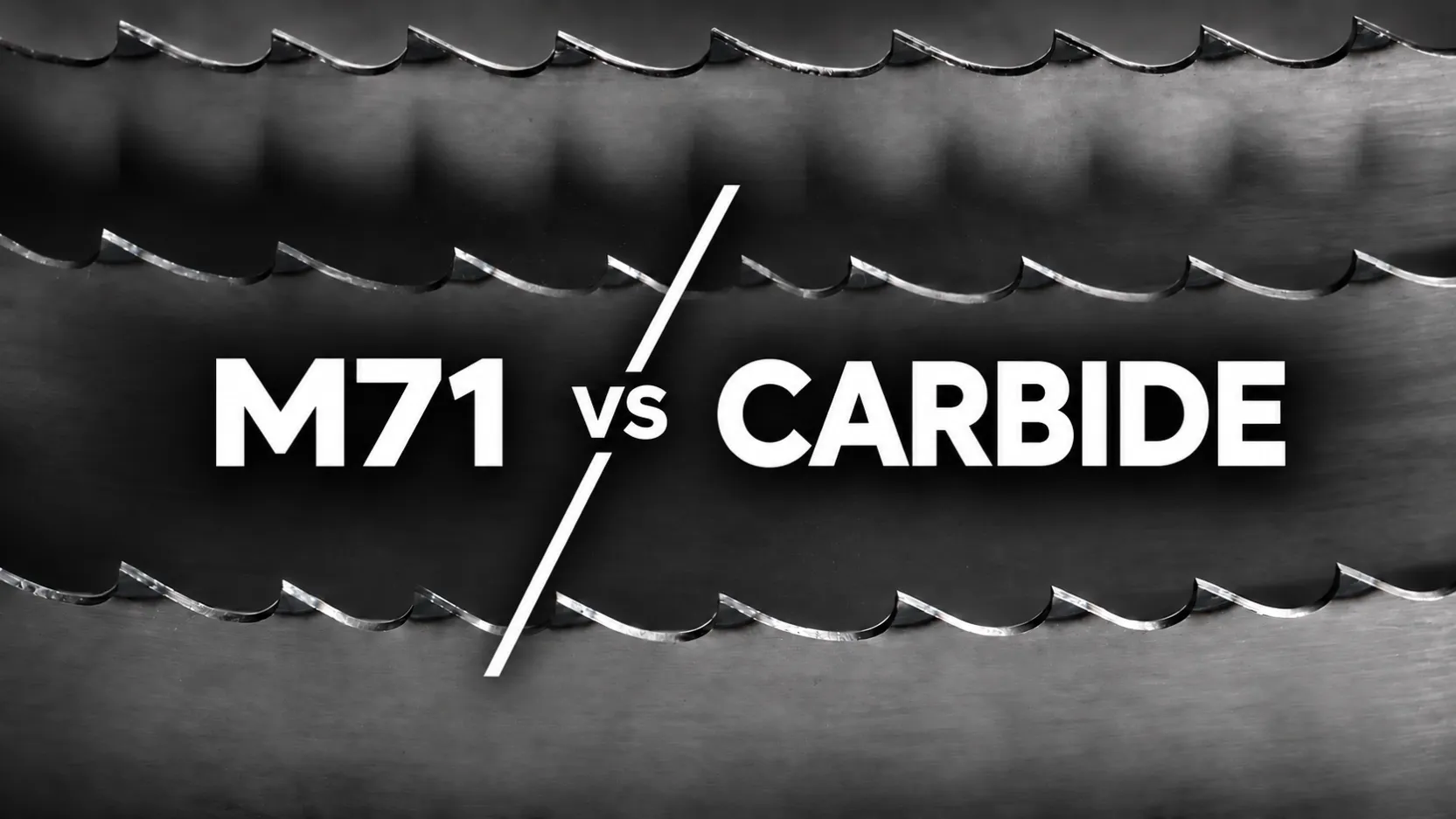
Choosing between M71 powder metallurgy high-speed steel (PM HSS) and carbide-tipped band saw blades is not simply a question of which cutting material is harder.
Both are designed for demanding metal-cutting applications, but they offer different advantages in wear resistance, toughness, cutting productivity, and operating cost.
For manufacturers and steel service centers, selecting the right blade can reduce downtime, improve cutting efficiency, and lower the cost per cut.
This guide compares M71 PM HSS and carbide band saw blades to help industrial buyers make a more informed decision.
1. What Is an M71 PM HSS Band Saw Blade?
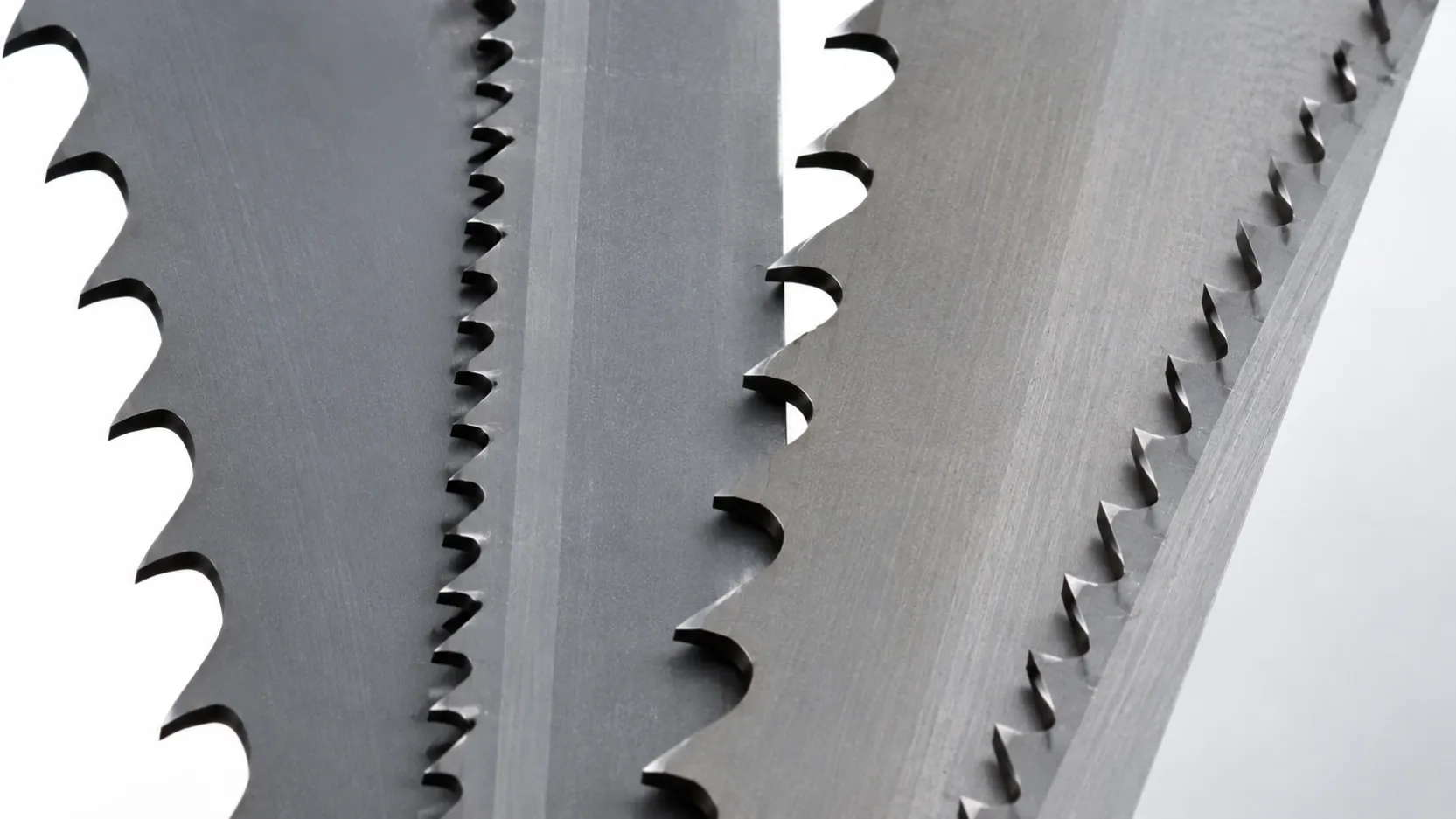
An M71 band saw blade uses powder metallurgy high-speed steel for its cutting teeth, combined with a flexible steel backing.
Powder metallurgy produces high-speed steel with a fine, relatively uniform carbide distribution. This microstructure can improve wear resistance and mechanical properties compared with conventional high-speed steels of comparable composition.
LianJi M71 blades feature tooth-tip hardness of approximately 69–70 HRC, making them suitable for demanding applications where conventional bi-metal blades may experience accelerated tooth wear.
The combination of hard cutting teeth and a flexible backing provides three important benefits:
- High wear resistance for challenging metal-cutting applications.
- Good cutting-edge toughness under appropriate operating conditions.
- Flexibility to withstand repeated bending around band saw wheels.
M71 is therefore an option for customers seeking higher cutting performance while retaining the practical advantages of bi-metal blade construction.
To understand how hard cutting teeth and flexible backing steel work together, read our guide: How Bi-Metal Band Saw Blades Work.
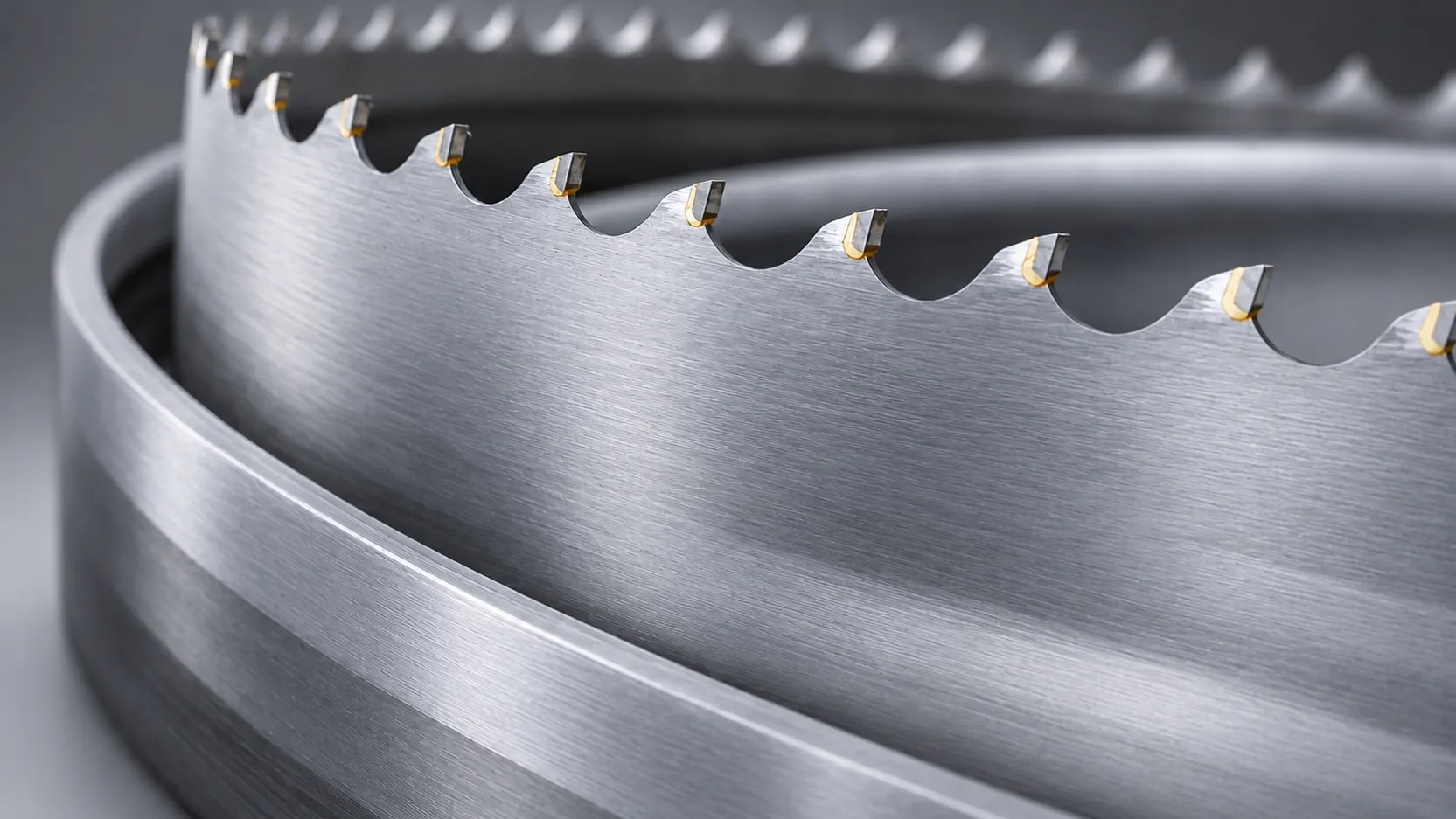
2. What Is a Carbide-Tipped Band Saw Blade?
Carbide-tipped band saw blades use tungsten carbide cutting tips attached to a steel backing.
The carbide cutting material offers very high hardness and wear resistance, allowing suitable blades to machine difficult materials and achieve high cutting rates.
Carbide blades are commonly selected for demanding production applications involving materials such as:
- Nickel-based alloys
- Titanium alloys
- High-alloy steels
- Abrasive materials
- Large solid metal sections
However, carbide cutting edges are generally less tolerant of impact and vibration than high-speed steel cutting edges.
To achieve reliable performance, carbide blades typically require a rigid, well-maintained band saw machine, stable clamping, accurate blade guidance, and properly controlled cutting parameters.
3. M71 vs Carbide Band Saw Blades: Key Differences
| Comparison | M71 PM HSS | Carbide-Tipped |
|---|---|---|
| Cutting material | Powder metallurgy high-speed steel | Tungsten carbide |
| Cutting-edge hardness | Approx. 69–70 HRC for LianJi M71 | Higher hardness; typically specified using HV or HRA |
| Wear resistance | High | Generally higher |
| Edge toughness | Generally more impact-tolerant | More sensitive to chipping |
| Cutting productivity | Suitable for demanding conventional sawing | Can achieve higher cutting rates |
| Machine requirements | Suitable for compatible industrial band saws | Often requires greater machine rigidity |
| Initial blade cost | Generally lower | Generally higher |
| Best economic use | Flexible production and varied applications | Stable, high-volume or difficult-material cutting |
These comparisons describe general material and application characteristics. Actual blade performance also depends on tooth geometry, material grade, machine condition, and cutting parameters.
4. Cutting Performance: Which Blade Is Faster?
Carbide-tipped blades can achieve significantly higher cutting rates than bi-metal blades in suitable applications.
Their high wear resistance allows them to maintain cutting performance under demanding conditions, particularly when processing difficult alloys or large solid sections.
However, a higher potential cutting speed does not automatically mean greater productivity in every workshop.
For example, a production facility using a rigid automatic band saw to cut hundreds of identical alloy-steel bars may benefit from carbide blades.
By contrast, a workshop processing different steel grades and dimensions throughout the day may find M71 PM HSS more practical.
Frequent material changes, variable cutting conditions, and machine limitations can reduce the productivity advantage of carbide.
Cutting performance also depends on selecting the correct tooth pitch. An unsuitable tooth pitch can reduce cutting efficiency and increase the risk of tooth damage, regardless of blade grade.
For practical tooth pitch recommendations, see our Band Saw Blade TPI Chart for Metal Cutting.
The best blade is the one that delivers stable performance under the customer's actual operating conditions.
5. Toughness and Tooth Chipping
Cutting-edge toughness is another important difference.
High-speed steel generally offers better resistance to impact-related edge damage than cemented carbide.
This characteristic can be useful when cutting conditions involve moderate vibration, varying material cross-sections, or interrupted cutting.
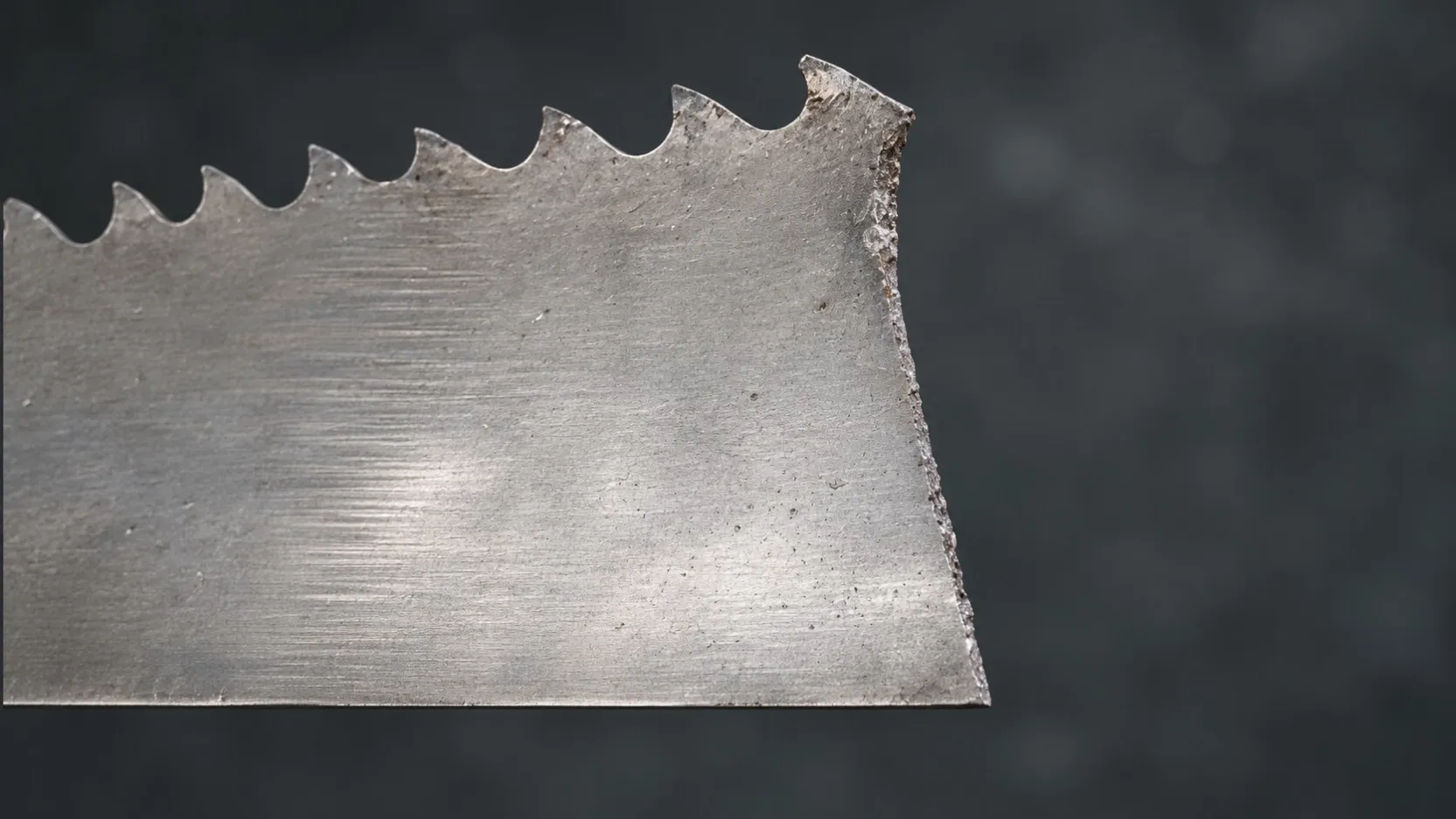
Carbide tips, although highly wear-resistant, can be vulnerable to microchipping if subjected to excessive vibration, unstable clamping, or unsuitable feed rates.
However, neither blade type is immune to damage.
Correct tooth pitch, blade tension, coolant application, and machine maintenance remain essential for achieving consistent blade life.
6. Cost Comparison: Look Beyond Blade Price
Carbide blades generally have a higher initial purchase price than PM HSS bi-metal blades.
However, evaluating blade cost alone can lead to an incorrect purchasing decision.
Industrial buyers should consider the total cost per cut:
Cost per Cut = (Blade Cost + Machine Operating Cost + Labor and Related Costs) ÷ Number of Acceptable Cuts
For high-volume production, a carbide blade may justify its higher purchase price through shorter cutting cycles and longer service life.
For mixed production or less demanding applications, M71 may provide a better balance between blade cost, cutting performance, and operational flexibility.
The economic result should be confirmed through actual production trials rather than assumed from blade hardness alone.
7. When Should You Choose M71 or Carbide?
Choose M71 PM HSS When:
- You need a high-performance bi-metal blade for demanding steel-cutting applications.
- Your workshop handles different materials and workpiece dimensions.
- Cutting-edge toughness and operational flexibility are important.
- Your machine is not optimized for high-productivity carbide cutting.
- You want to balance blade performance and purchasing cost.
Choose Carbide-Tipped Blades When:
- You regularly process difficult-to-machine or highly abrasive materials.
- High cutting productivity is a major production priority.
- Your band saw provides sufficient rigidity and stable blade guidance.
- You manufacture large quantities of similar components.
- Production trials demonstrate a lower total cost per cut.
Before selecting either blade type, consider the workpiece material, cutting cross-section, machine specifications, and production requirements.
For a step-by-step explanation of these factors, read our guide: How to Choose a Band Saw Blade for Metal Cutting.
8. Final Verdict: Which Blade Is Better?
Neither M71 PM HSS nor carbide is universally better.
M71 offers a balance of wear resistance, cutting-edge toughness, flexibility, and cost, making it an attractive option for demanding applications that benefit from bi-metal blade construction.
Carbide offers greater cutting-edge hardness and potentially higher productivity, particularly for difficult materials and stable, high-volume production environments.
The final decision should consider five factors:
- Workpiece material and hardness
- Material dimensions and cutting cross-section
- Band saw machine rigidity and capabilities
- Required production volume
- Target cost per cut
At LianJi, we help customers evaluate band saw blade options based on their actual cutting requirements.
Whether you are selecting M71 PM HSS or considering carbide-tipped blades, choosing the correct blade specification is essential for efficient and reliable metal cutting.
Need Help Selecting a Band Saw Blade?
Share your workpiece material, dimensions, band saw machine model, and expected cutting volume with our team.
We can help you evaluate suitable blade specifications for your application.
Contact: sales@ljsaws.com